The Reason Software Subscriptions Are Everywhere
TL;DR
Software subscriptions dominate today’s market because they create predictable revenue streams for companies while offering consumers lower upfront costs. Cloud computing made continuous software delivery possible, eliminating the need for physical media or manual updates. Businesses prefer subscriptions because they generate recurring revenue, improve cash flow, and increase company valuations—Adobe’s stock tripled after switching to subscriptions. For users, the trade-off is accessibility versus ownership: you pay less today but never truly own the software. The model also reduces piracy, provides better compliance tracking, and enables continuous improvement. While subscription fatigue is real, the economic incentives are too strong for most software companies to resist, making this shift likely permanent for most categories.
Introduction: The Subscription Takeover
Remember when you bought software once and owned it forever? Those days are fading fast.
From Adobe Creative Cloud to Microsoft 365, from Autodesk to QuickBooks, nearly every major software company has shifted to subscription models. Even smaller developers and niche tools have followed suit. If you’ve wondered why you can’t just “buy” software anymore, you’re not alone.
The reason software subscriptions are everywhere isn’t about what’s best for you—it’s about what’s irresistible to software companies. But the story is more nuanced than simple corporate greed. Let’s examine the economic, technical, and practical forces that made subscriptions inevitable.
The Core Economic Driver: Predictable Revenue Streams
The primary reason subscriptions conquered software is simple: predictable, recurring revenue.
Under the old perpetual license model, software companies faced a brutal reality. They’d pour resources into developing Version 2.0, launch it, and hope customers would upgrade. Many wouldn’t. Revenue became unpredictable, creating feast-or-famine cycles that made long-term planning difficult.
Subscriptions transformed this equation. Instead of one-time payments, companies now receive monthly or annual recurring revenue (MRR/ARR). This predictability allows for:
- Better financial forecasting — Companies know their baseline revenue months in advance
- Higher valuations — Investors pay premium multiples for recurring revenue businesses
- Consistent development funding — Teams can plan multi-year roadmaps with confidence
Adobe’s transformation illustrates this perfectly. After switching to Creative Cloud subscriptions in 2013, their stock price tripled within three years. Their revenue became predictable, their customer relationships continuous, and Wall Street rewarded them handsomely.
For software companies, subscriptions aren’t just a pricing model—they’re a fundamental business transformation.
How Cloud Computing Made Subscriptions Possible
Subscriptions existed before the cloud, but cloud infrastructure made them practical and scalable.
In the DVD-ROM era, delivering updated software meant manufacturing discs, shipping boxes, and hoping customers would install patches. This made continuous updates economically unfeasible. You sold Version 1.0, then started working on Version 2.0 for next year’s big release.
Cloud computing changed everything:
- The shift to always-on internet connectivity meant software could live on remote servers.
- Updates could deploy instantly to millions of users simultaneously.
- Bug fixes, security patches, and new features could roll out continuously rather than annually.
This technical infrastructure didn’t just enable subscriptions—it made them logical. Why charge once for software that’s constantly evolving? Why maintain multiple versions when everyone can use the latest build?
Cloud delivery also eliminated physical costs. No manufacturing, no inventory, no retail distribution. The marginal cost of adding one more subscriber approaches zero, making subscriptions incredibly profitable at scale.
The Business Case: Why Companies Prefer Subscriptions
Beyond predictable revenue, subscriptions offer several strategic advantages that traditional licensing couldn’t match.
- Lower customer acquisition costs: Instead of convincing someone to spend $500 upfront, you only need them to commit to $20/month. The psychological barrier drops dramatically. Companies convert more prospects and can offer tiered pricing to capture different market segments.
- Continuous customer engagement: With perpetual licenses, companies lost touch with customers after the sale. Subscriptions create ongoing relationships. Every billing cycle is an opportunity to demonstrate value, upsell features, or prevent cancellation.
- Better cash flow management: Rather than revenue spikes at product launches followed by dry periods, subscriptions generate steady monthly income. This makes it easier to hire staff, invest in R&D, and weather economic downturns.
- Customer lifetime value optimization: Companies shifted from thinking about “purchase price” to “lifetime value.” A customer paying $30/month for five years is worth $1,800—far more than they’d pay for a single license. This math justifies higher acquisition costs and better customer service.
- Easier scaling and growth metrics: Subscription businesses have clear, measurable KPIs: monthly recurring revenue, churn rate, customer acquisition cost, lifetime value. These metrics make it easier to identify problems, measure marketing effectiveness, and scale systematically.
From the Consumer Side: Why Users Accept (or Resist) Subscriptions
For consumers, subscriptions present a complex trade-off.
The upside is real: Lower entry barriers make professional software accessible to more people. A freelance designer can access the full Adobe suite for $60/month instead of thousands upfront. Students, hobbyists, and small businesses gain access to tools that were previously out of reach.
You also get continuous updates. With perpetual licenses, you might run outdated software for years. Subscriptions ensure you’re always using the current version with the latest features, bug fixes, and security patches.
But the downsides sting: You never own the software. Stop paying, and you lose access—sometimes even to files you created. Over time, you might pay far more than the old perpetual license cost. A $50/month subscription becomes $600 annually, $6,000 over a decade.
Subscription fatigue is growing. As more services demand monthly payments—streaming, gaming, productivity, creative tools, cloud storage—consumers feel nickeled-and-dimed. Some users actively seek alternatives or hold onto old perpetual licenses as long as possible.
The acceptance ultimately comes down to necessity. When industry-standard tools go subscription-only, professionals have little choice. This leverage allows companies to push through resistance.
What Happened to Traditional Perpetual Licenses?
Perpetual licensing isn’t completely dead, but it’s increasingly niche.
You’ll still find perpetual options in specialized industries where customers demand ownership: enterprise infrastructure software, engineering tools, some CAD systems. Companies serving government, healthcare, or industries with strict compliance requirements may maintain perpetual options.
Why perpetual licenses declined:
- The economics simply don’t favor them anymore. When Adobe offered both models, customers who bought perpetual licenses might skip two or three upgrade cycles. Subscribers pay consistently. From a business perspective, there’s no comparison.
- Some companies now charge premium prices for perpetual licenses—essentially pricing them to encourage subscription adoption. Others eliminated the option entirely.
Interestingly, some markets are seeing hybrid models emerge: pay annually for the subscription at a discount that approximates “ownership,” or pay-per-project pricing that reduces commitment anxiety.
Real-World Examples: Industries Leading the Subscription Shift
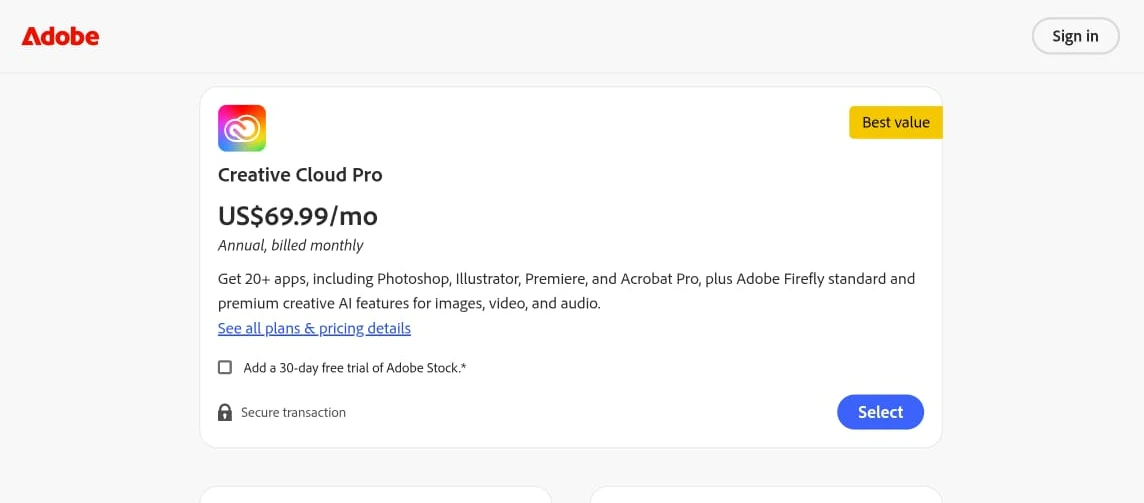
- Creative software: Adobe pioneered this shift with Creative Cloud, transforming Photoshop, Illustrator, and Premiere from $2,500+ perpetual suites to $60/month subscriptions. Despite initial backlash, the model proved so successful that Autodesk, CorelDRAW, and others followed.
- Productivity tools: Microsoft 365 (formerly Office 365) replaced standalone Office purchases. Google Workspace operates entirely on subscriptions. Even basic utilities like password managers and backup software shifted to recurring pricing.
- Development tools and platforms: JetBrains IDEs, GitHub, web hosting, and cloud infrastructure all operate on subscriptions. Developers—who once championed software ownership—now work almost entirely in subscription environments.
- Entertainment and media software: Video editing, music production, 3D modeling, and game development tools increasingly require subscriptions. Final Cut Pro remains a notable holdout with perpetual pricing.
The Hidden Factors Driving Subscription Adoption
Several less-discussed factors accelerated the subscription shift:
- Piracy reduction: Subscriptions with online authentication make piracy significantly harder. Instead of cracking a one-time license check, pirates must bypass continuous authentication. This isn’t foolproof, but it dramatically reduces unauthorized usage.
- Better compliance and license management: Companies can track exactly how many licenses are in use, who’s using them, and whether accounts remain active. This prevents over-deployment and makes enterprise licensing more manageable.
- Data collection and user insights: Subscriptions enable continuous telemetry. Companies learn which features users engage with, where they struggle, and what drives cancellations. This data informs product development in ways perpetual licenses never could.
- Competitive pressure: Once Adobe moved to subscriptions successfully, competitors faced a choice: match the model or accept competitive disadvantage. The pressure to conform became overwhelming.
The Downsides: What We Lost in the Shift
The subscription revolution wasn’t without casualties.
- Total cost of ownership skyrocketed: Users who previously upgraded every 3-4 years now pay continuously. Someone who spent $700 on Photoshop CS6 and used it for six years paid $117/year. Creative Cloud at $60/month costs $720/year—more than six times as much.
- Loss of software ownership: You’re renting, not buying. If the company raises prices, you pay more or lose access. If they discontinue the product, your investment evaporates. If you stop your business temporarily, you still pay to maintain access.
- Dependency on continued service: Your work depends on someone else’s servers, authentication systems, and business continuity. Adobe’s authentication servers went down in 2020, locking users out of software they were paying for.
- Privacy and data concerns: Continuous connectivity means continuous data collection. While useful for improving products, it raises questions about what companies track and how they use that information.
Is the Subscription Model Here to Stay?
The short answer: yes, for most software categories.
The economic incentives are too powerful. Public companies optimize for stock price, and Wall Street values recurring revenue at premium multiples. Private equity loves predictable cash flows. No rational business will voluntarily return to perpetual licensing when subscriptions generate more revenue.
But cracks are appearing: Consumer pushback is real and growing. Apple faced criticism for App Store subscription proliferation. Some developers are testing one-time payments or pay-per-project models. Open-source alternatives are gaining traction as subscription-weary users seek escape routes.
Regulatory pressure might eventually force changes. The EU’s Digital Markets Act and similar regulations focus on platform control and user rights. Future legislation could address subscription lock-in or mandate data portability.
Predictions for the next 5-10 years:
- Hybrid models will grow more common.
- Expect tiered pricing that offers perpetual licenses at premium prices while steering most users toward subscriptions.
- Pay-per-use models may emerge for occasional users.
- Subscription bundling will increase—think “software Netflix” with access to multiple tools under one payment.
The pendulum might swing slightly back, but the core model is here to stay.
How to Navigate the Subscription Software Landscape
As a consumer or business, you have some options:
- Evaluate carefully: Calculate total cost over your expected usage period. Sometimes the subscription is genuinely cheaper, especially for tools you use briefly or intermittently.
- Look for alternatives: Open-source tools like GIMP, Blender, and LibreOffice provide capable (if less polished) alternatives to subscription giants. Some commercial tools still offer perpetual licenses—seek them out if ownership matters.
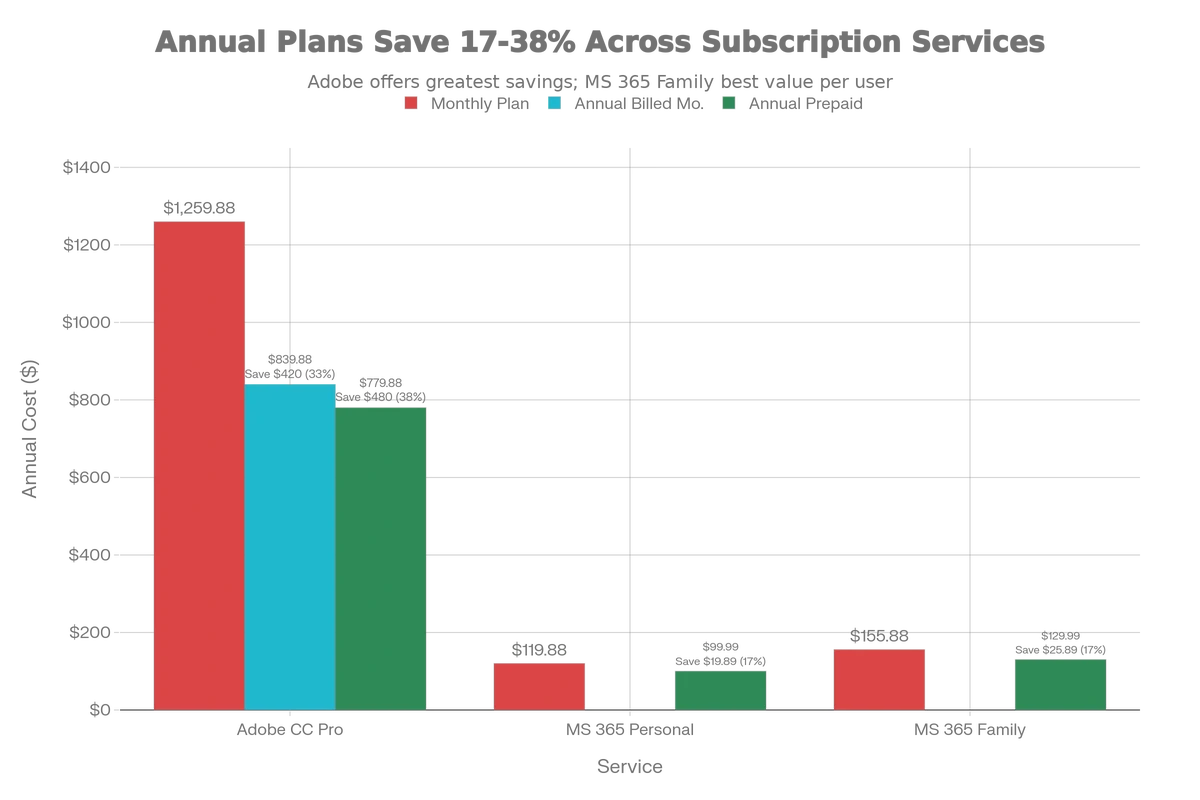
- Negotiate: Enterprise customers have leverage. Push for discounts, flexible terms, or hybrid options. Many companies offer annual subscriptions at 20-30% discounts.
- Consolidate: Can you use one comprehensive suite instead of multiple subscriptions? Microsoft 365 bundles replace several individual tools.
- Accept strategically: For mission-critical tools where you need cutting-edge features and support, subscriptions often make sense. For peripheral tools, explore alternatives.
Conclusion: Understanding the Subscription Everywhere Reality
Software subscriptions aren’t everywhere by accident or conspiracy—they’re everywhere because they work incredibly well for the companies selling them.
The combination of predictable revenue, cloud infrastructure, reduced piracy, and continuous customer engagement creates overwhelming incentives for businesses to adopt subscription models. While consumers lose ownership and face higher long-term costs, the lower entry barriers and continuous updates provide genuine value for many users.
The shift reflects a broader economic trend toward access over ownership, from Netflix to Spotify to car-sharing services. Software was simply early to recognize that controlling access generates more value than selling products.
Understanding these forces doesn’t mean you have to like them. But it does explain why your frustration at being unable to “just buy” software won’t reverse the trend. The economics are too compelling, and the transformation is too complete.
The best response is informed navigation: choose subscriptions where they provide value, seek alternatives where they don’t, and support companies that offer consumer-friendly licensing models. The subscription era is here—but that doesn’t mean you’re powerless within it.
Frequently Asked Questions
Why did software companies switch to subscriptions?
Subscriptions provide predictable recurring revenue, which is more valuable to investors and easier to manage than one-time sales. Companies also benefit from continuous customer relationships, reduced piracy, and better cash flow.
Are software subscriptions more expensive than buying software outright?
Over the long term, yes. If you use software for many years, subscriptions typically cost more than a perpetual license would have. However, subscriptions have lower upfront costs and include continuous updates, which can provide value depending on your usage patterns.
Can I still buy software with a one-time payment?
Some software still offers perpetual licenses, particularly in specialized industries or enterprise markets. However, major consumer applications increasingly offer subscriptions only. Open-source alternatives often remain free.
What happens to my files if I stop paying for a subscription?
This varies by software. Some applications let you view but not edit files. Others lock you out entirely. Many cloud-based tools require you to export your data before canceling. Always check the terms and maintain local backups.
Will software subscriptions ever go away?
Unlikely. The business model is too profitable and the infrastructure too established. However, we may see more hybrid models, regulatory pressure for consumer protections, and continued availability of open-source alternatives.
How can I reduce subscription costs?
Look for annual payment discounts (often 20-30% off monthly pricing), bundle services where possible, evaluate whether you truly need premium features, and consider open-source alternatives for non-critical tools. Businesses should negotiate enterprise agreements.